Le nostre altre Soluzioni
Scoprite i nostri strumenti che vi offrono raccomandazioni enologiche chiare, quantificate e immediatamente applicabili per decidere rapidamente e garantire le vostre scelte sull'uso del legno e dei tannini, il tutto gratuitamente.
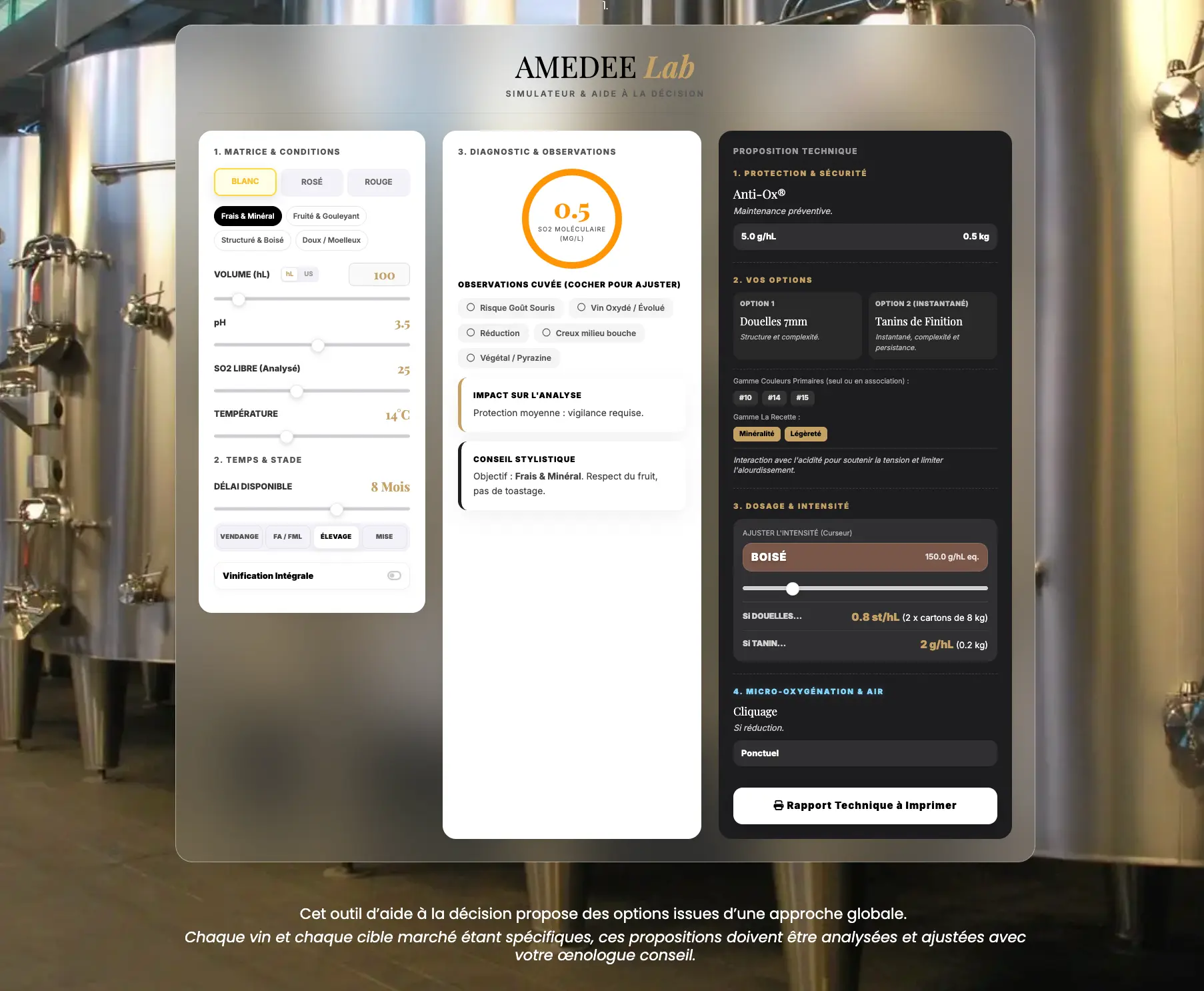
SERBATOI:
Simulatore e Supporto alla Decisione
Diagnosi rapida dei vostri vini (SO2 libero, profili da costruire) per ottenere raccomandazioni immediate sulla protezione, gli apporti di legno o di tannini e la micro-ossigenazione.
IN LABORATORIO:
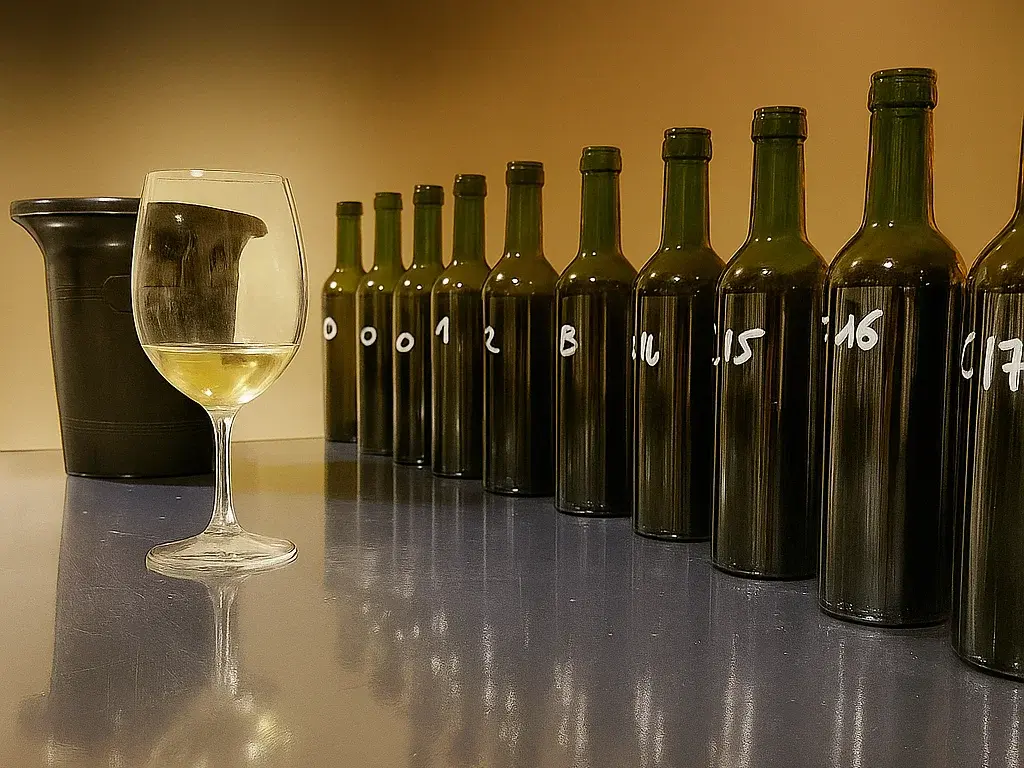
Stimate i dosaggi e calcolate il vostro fabbisogno.
Realizza i tuoi esperimenti grazie al nostro kit enologico di supporto alle decisioni.
BOTTI:
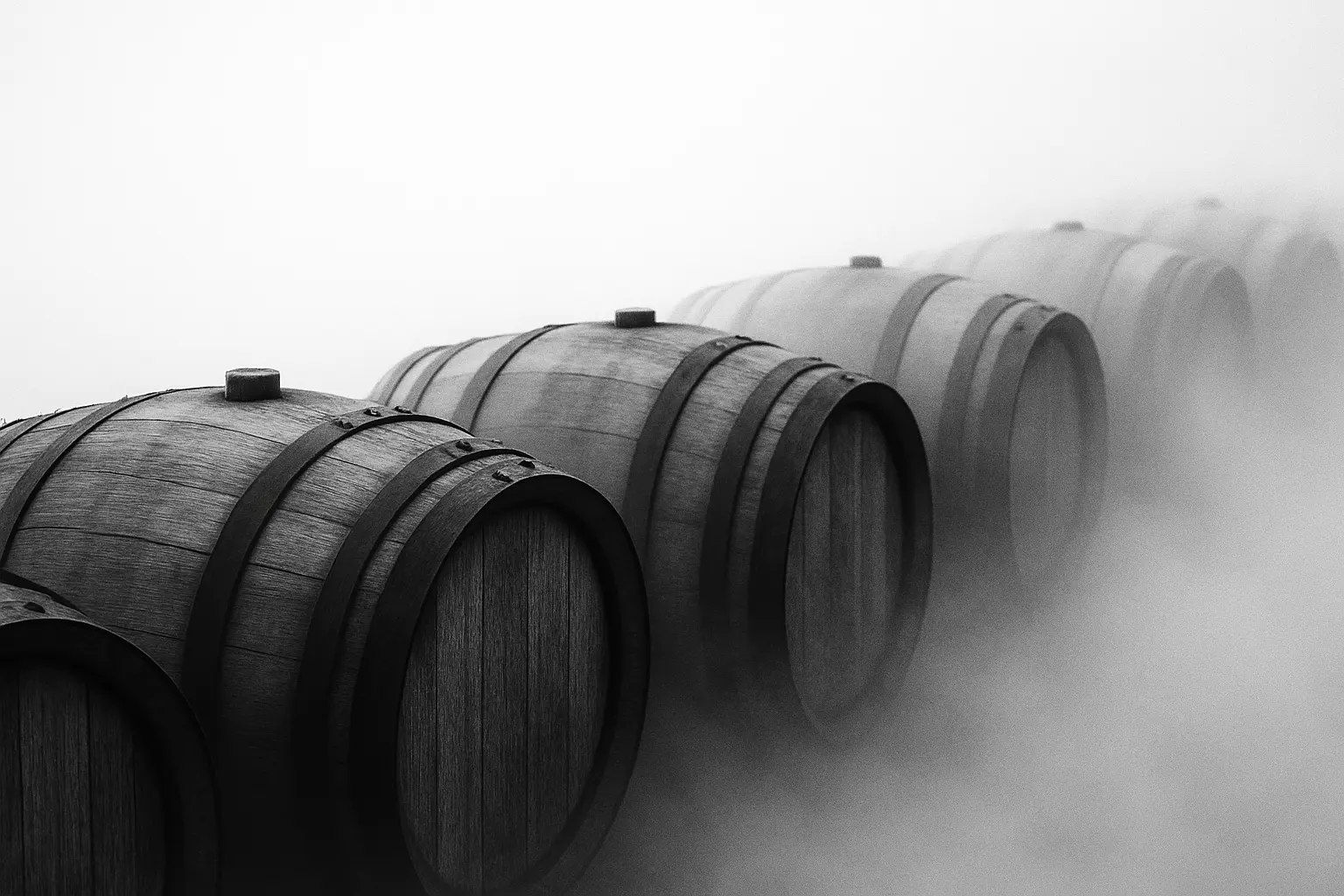
Gestire il vostro parco barrique
Modella l'usura delle tue botti a partire da un vino e oltre. Stima il potenziale enologico rimanente e calcola precisamente la rigenerazione necessaria per mantenere i tuoi profili ottimizzando al contempo il tuo investimento in legno.
What the oak dosage simulator does
It answers one question: for this volume, this wine and this target, how much oak, in which format, and for how long. It returns a dose in g/hL or in units per hectoliter, a contact time, and a comparison between chips, staves and inserts on the same tank.
What the numbers behind it are
The simulator runs on the figures we publish in full in our oak conversion table: doses established on our own oak, French oak air dried for 36 months and toasted by convection, calibrated against one reference, the new barrel, which releases about 60 % of its oenological capital in the first year.
The contact times it applies are ours, and they are minimums: at least 1 month for fine chips, 2 to 3 months to reach the extraction plateau, at least 4 months for a 7 mm stave, at least 7 months for an 18 mm stave. Below those thresholds extraction is not merely incomplete, it is unbalanced: the surface notes come out first and the base arrives later. Shorten the contact and the dose has to go up, but a higher dose does not replace time. The reverse holds too, and a long contact at a moderate dose gives a more integrated oak than a short contact at a high dose.
What it does not settle
It gives an intensity, not a profile: the character comes from the toasting profile, not from the dose. It was established on wine and does not transfer to spirits, beer or non-alcoholic drinks. And it knows nothing about your cellar temperature or the real state of your tanks. It suggests, it does not decide, and a bench trial before treating the tank stays the only real answer.