Our other Solutions
Discover our tools that provide you with clear, quantified, and immediately applicable oenological recommendations to make quick decisions and secure your choices regarding the use of wood and tannins, all of this for free.
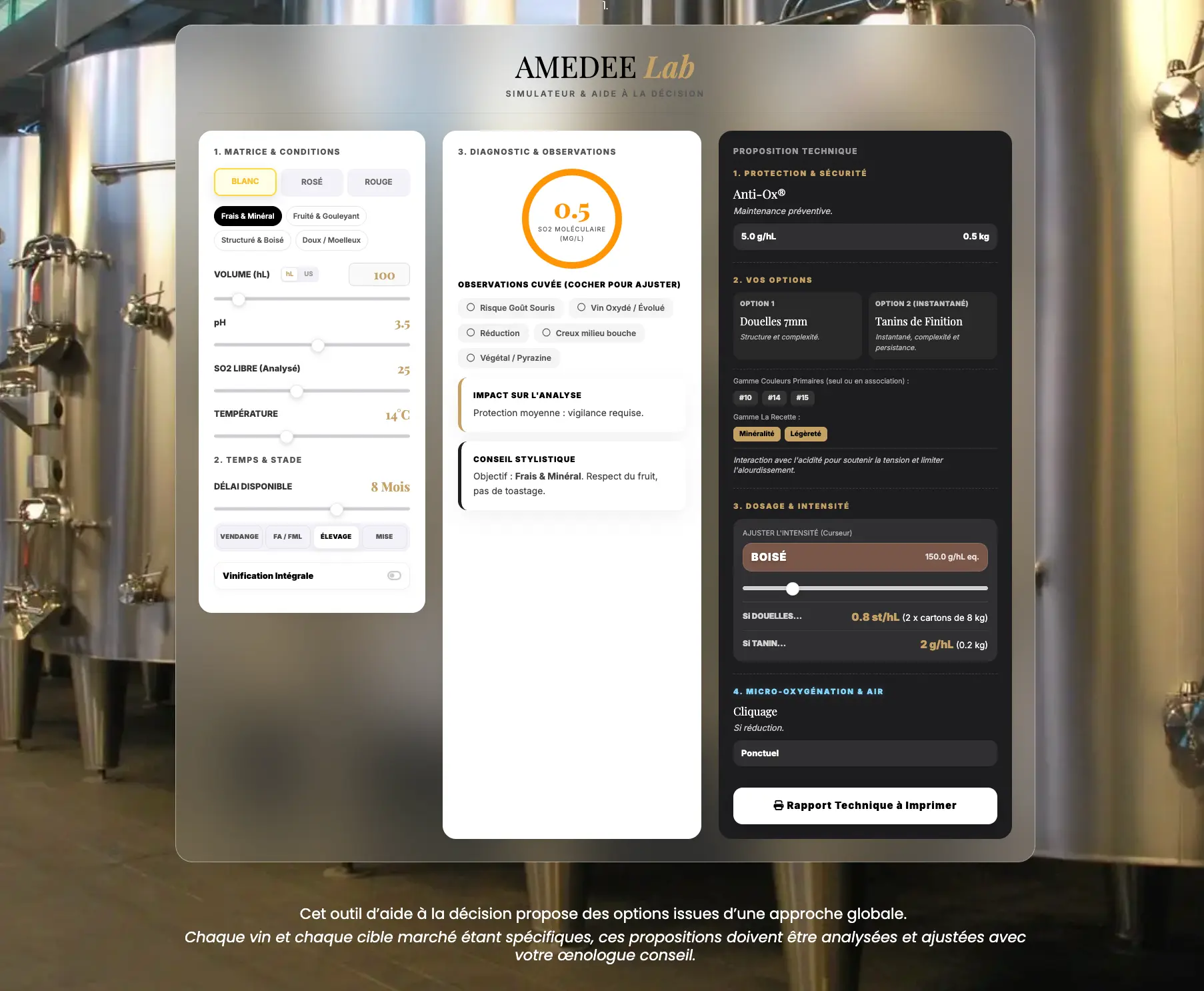
CUVES:
Simulator & Decision Support
Quick diagnosis of your wines (free SO2, profiles to build) to obtain immediate recommendations on protection, wood or tannin additions, and micro-oxygenation.
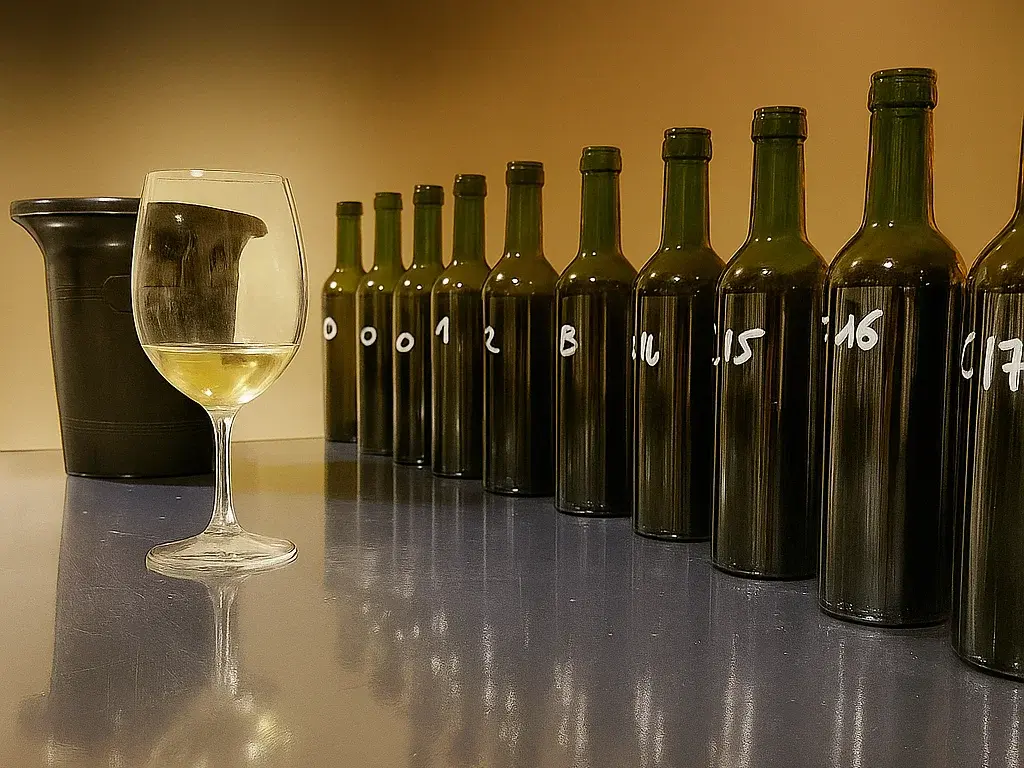
AU LABORATOIRE:
Estimate the dosages and calculate your needs.
Carry out your trials with our oenological decision-making kit.
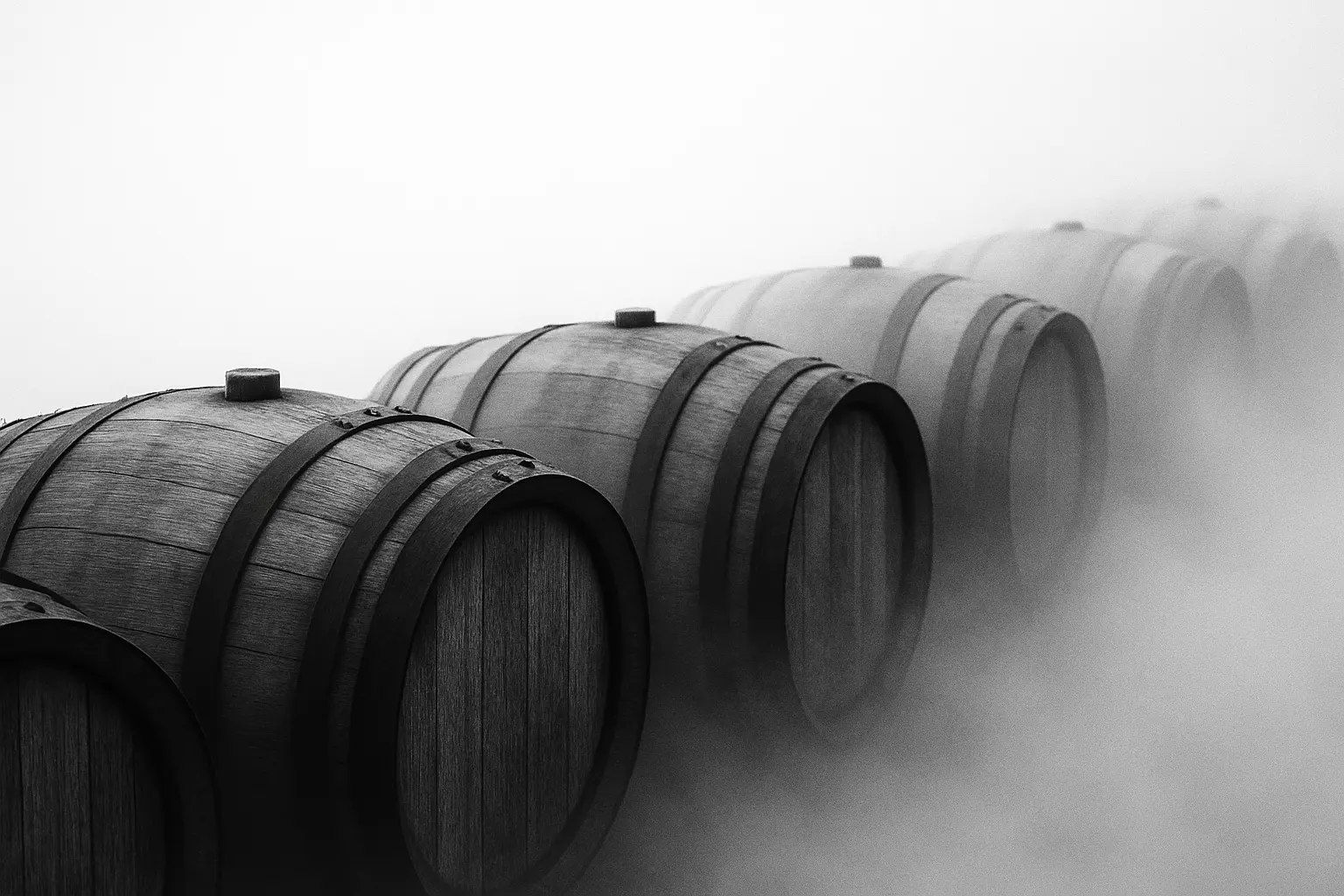
BARRIQUES:
Manage your barrels
Model the wear of your barrels based on a wine and more. Estimate the remaining oenological potential and calculate precisely the regeneration needed to maintain your profiles while optimising your wood investment.
What the oak dosage simulator does
It answers one question: for this volume, this wine and this target, how much oak, in which format, and for how long. It returns a dose in g/hL or in units per hectoliter, a contact time, and a comparison between chips, staves and inserts on the same tank.
What the numbers behind it are
The simulator runs on the figures we publish in full in our oak conversion table: doses established on our own oak, French oak air dried for 36 months and toasted by convection, calibrated against one reference, the new barrel, which releases about 60 % of its oenological capital in the first year.
The contact times it applies are ours, and they are minimums: at least 1 month for fine chips, 2 to 3 months to reach the extraction plateau, at least 4 months for a 7 mm stave, at least 7 months for an 18 mm stave. Below those thresholds extraction is not merely incomplete, it is unbalanced: the surface notes come out first and the base arrives later. Shorten the contact and the dose has to go up, but a higher dose does not replace time. The reverse holds too, and a long contact at a moderate dose gives a more integrated oak than a short contact at a high dose.
What it does not settle
It gives an intensity, not a profile: the character comes from the toasting profile, not from the dose. It was established on wine and does not transfer to spirits, beer or non-alcoholic drinks. And it knows nothing about your cellar temperature or the real state of your tanks. It suggests, it does not decide, and a bench trial before treating the tank stays the only real answer.